What happens when the places that are supposed to feel safest become the places that wound us most deeply?
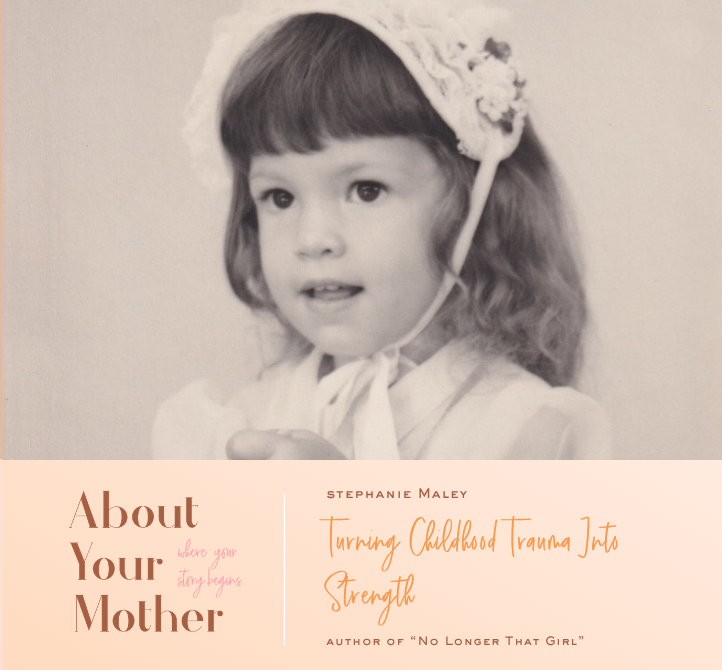
In this episode, I sit down with Stephanie Maley to talk about her memoir, No Longer That Girl, and the extraordinary path she’s taken from childhood trauma to a life rooted in faith, resilience, love, and purpose. Stephanie shares how the pandemic forced her to confront old fears, how the Me Too movement cracked open grief she had kept buried for decades, and how writing became one of the most healing tools in her recovery.
We talk about what it means to live through illness, grooming, molestation, shame, abandonment, and family instability—and still create a beautiful life on the other side. What moved me most in this conversation is Stephanie’s honesty. She doesn’t minimize what happened to her, but she also refuses to let it define her entire story. She speaks with so much wisdom about faith, sports, writing, marriage, boundaries, and the deliberate work of becoming whole. I’ve never heard anyone speak to their trauma in the way that Stephanie does, and I just know you’ll enjoy this conversation
Trigger warning: This episode highlights experiences of trauma, grooming, and sexual assault.
🎙️ Listen to This Episode If You’re Wondering:
- How do you heal from childhood trauma?
- Why does trauma resurface years later?
- Can writing help process emotional pain?
- How do you move from victim to survivor—and beyond?
- What does healthy love look like after trauma?
When Trauma Resurfaces
When the COVID-19 pandemic began, it triggered a deep sense of fear and unsafety for Stephanie. It reactivated something much older for her that she had buried for a long time—an internal feeling that she wasn’t safe.
That’s the thing about trauma—it doesn’t stay in the past. It lives in the body.
Her therapist helped her recognize that what she was feeling wasn’t just about the present moment. It was connected to earlier experiences where safety was uncertain. That awareness became a turning point.
The Power of Not Feeling Alone
As Stephanie was searching for a way to heal, she was moved by the Me Too movement. It gave her something she hadn’t fully felt before: confirmation that she wasn’t alone. It finally gave language and visibility to what she had been carrying alone.
For years, she held her experiences privately. Intellectually, she knew she couldn’t be the only one—but emotionally, it still felt isolating, like something that had only happened to her.
When the Me Too movement gained momentum, that began to shift.
As more women spoke openly about their experiences with abuse and violation, Stephanie felt something inside her start to open. She described it as a kind of confirmation—an undeniable realization that she wasn’t alone, and that what she had lived through was real, valid, and shared by others.
But with that recognition also came something deeper: grief.
The stories she heard didn’t just validate her—they brought her back into her own. Feelings she had suppressed for years began to surface. Places in her story she hadn’t fully processed started to demand attention.
It wasn’t easy, but it was necessary.
That collective honesty created space for her to begin engaging more fully with her own experiences—not just intellectually, but emotionally.
And sometimes, that’s where healing truly begins: not in fixing or resolving, but in finally allowing yourself to feel what’s been there all along.
Writing as a Healing Tool
Stephanie knew she wanted to write a book for decades, but the real shift came when she stopped just documenting what happened and started exploring how she felt.
She described going back to her younger self and asking, “What did you really feel?” That process allowed her to reconnect with emotions she had suppressed in order to survive.
Writing became a way to release what she had been holding internally. And while not everyone needs to write a book, I agree with her—writing, even privately, can be incredibly healing.
Grooming, Shame, and Silence
Stephanie’s story brings the reality of grooming into sharp focus—especially how it unfolds in environments that are supposed to feel safe.
The person who abused her wasn’t someone on the fringes. He was a trusted, respected leader in her church. He was someone other adults admired and welcomed, which made everything more confusing.
As a young girl, she didn’t have the context to understand what was happening. She only knew that something felt off, but when everyone around her treated him as safe, even good, it created a deep internal conflict.
She also describes how he gradually crossed boundaries—starting with affection that could be mistaken for care, then becoming increasingly inappropriate when they were alone. That progression is what makes grooming so insidious. It builds slowly, quietly, and often invisibly to others.
What stayed with her just as much as the abuse was the silence that followed.
She remembers another girl saying “no” in a similar moment—and questioning why she hadn’t. That question turned into shame. And that shame kept her quiet for years.
As Stephanie said, shame is a silencer—and it’s exactly what predators rely on.
Reclaiming the Body Through Movement
One of the most powerful parts of Stephanie’s story is how sports became a lifeline. Movement gave her focus, release, and a sense of power. Even when her voice felt limited, her body remained a source of strength.
She could compete, focus, and fully immerse herself in something that was hers.
This is something I deeply relate to. Movement can be a way back to yourself. It helps regulate the mind, process emotion, and rebuild a sense of control.
Faith as a Foundation
Despite what she experienced, Stephanie maintained a strong sense of faith. What stood out to me is how she separated her personal relationship with God from the people who failed her. That distinction allowed her to hold onto something steady.
Her faith isn’t passive—it’s practiced daily. Through prayer, reading, movement, and intentional living, she’s built a framework that supports her resilience.
And that’s the key takeaway here: whether it’s faith or something else, having a consistent framework matters.
Building Safe Love
Stephanie’s marriage is a beautiful example of what safe, healthy love can look like. After years of instability, she found a partner who is kind, steady, and emotionally safe. What sustains their relationship is communication and the ability to truly listen.
It’s also a reminder that healing includes learning to recognize and accept healthy love—not just survive unhealthy dynamics.
Mothers, Daughters, and Understanding
We also talked about her relationship with her mother, and what came through most clearly was compassion.
As a child, she often felt responsible for her mother’s happiness. With instability in her mother’s relationships and emotional life, Stephanie stepped into a role that wasn’t hers—trying to keep things steady, trying to make her mother okay.
She describes always feeling loved by her mother, but also growing up in an environment that wasn’t consistently stable or safe. That combination shaped her in profound ways—creating both deep loyalty and a tendency to put others’ needs ahead of her own.
Stephanie understands her mother’s story now in a way she couldn’t as a child. She understands now what her mother went through—marrying young, experiencing abandonment, navigating difficult relationships, and doing the best she could without the tools or support she needed. That perspective has allowed Stephanie to hold two truths at once: her mother loved her, and there were things she didn’t receive.
That balance is powerful.
Because it moves her out of blame and into understanding—without dismissing the impact. And it helps explain patterns she later had to unlearn, like over-functioning in relationships and feeling responsible for other people’s emotional well-being.
Understanding it didn’t erase it—but it gave her the clarity to change it.
From Victim to Resilient: Redefining Your Story
Stephanie said something that really stayed with me: you may be a victim of what happened, but you don’t have to stay there.
And she doesn’t say that lightly—she lived it.
Healing doesn’t mean denying what happened. It means deciding what comes next. For years, she carried the weight of abuse, silence, shame, illness, and instability. She didn’t bypass it or pretend it didn’t matter. She did the work—therapy, writing, building relationships, setting boundaries, creating a life rooted in intention.
She learned how to set boundaries. She stopped over-functioning in one-sided relationships. She built a marriage rooted in safety and communication. She created a life that reflected intention instead of survival.
Healing, for her, wasn’t about erasing the past. It was about no longer letting it define her choices. And today, she can say something many people long to feel: she loves her life.
Key Takeaways from This Episode
Resilience isn’t something we’re born with or without. It’s something we build.
Through writing.
Through movement.
Through support.
Through boundaries.
Through truth.
Stephanie’s story is a reminder that while we can’t change what happened, we can shape what comes next.
And sometimes, the most powerful outcome isn’t perfection—it’s being able to say, honestly: I love my life.
Connect with Stephanie:
Website: stephmaley.com
Book: stephmaley.com/memoir